
Morocco rewards travellers who allow it time.
Beyond Marrakech's rose-coloured walls and the intricate lanes of Fès lies a country best experienced slowly — through carefully chosen stays, private encounters, thoughtful service and journeys shaped around the rhythm of the traveller.
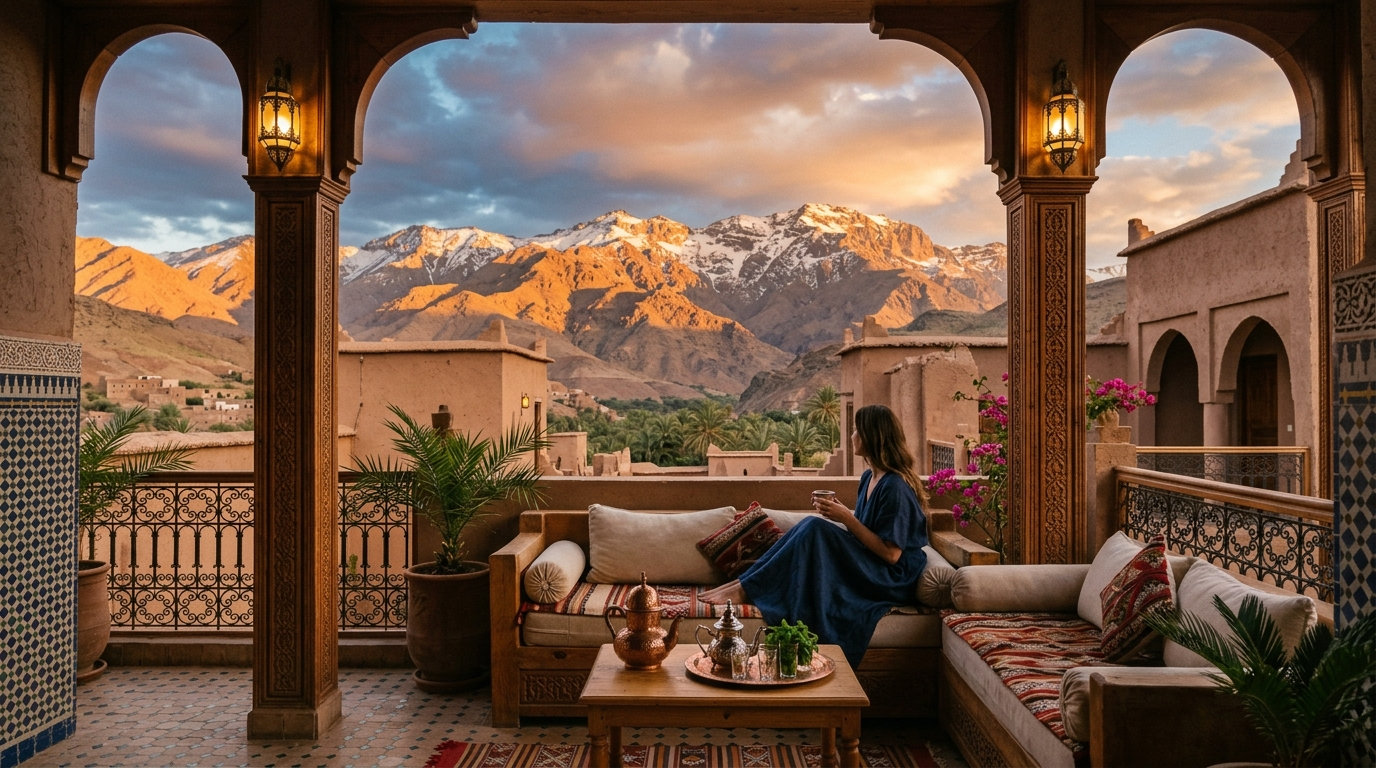
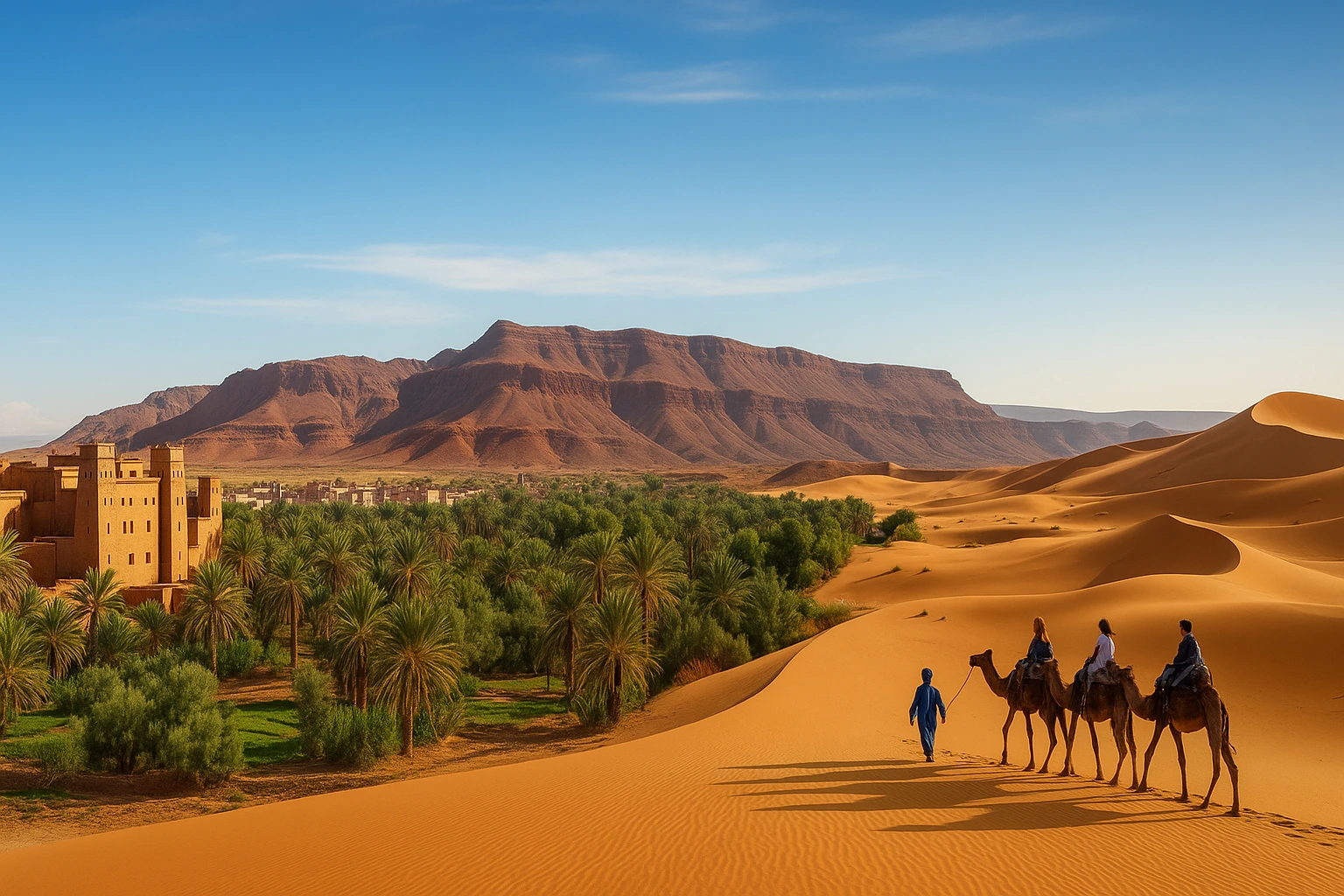
Luxury travel in Morocco is not simply about five-star hotels or private cars. It is about access, ease and a deeper sense of place. It might mean waking in the quiet of a centuries-old riad before the medina stirs, crossing the Atlas Mountains with a private driver who knows where to stop, or arriving in the Sahara as the last light moves across the dunes.
For travellers seeking something more personal, Morocco lends itself naturally to tailor-made travel.
This guide explores how to experience the country privately and comfortably, from Marrakech and Fès to the Atlantic coast and the Sahara.
What Does Luxury Travel in Morocco Really Mean?
Luxury in Morocco is often found in contrasts.
A beautifully restored riad may sit behind an almost anonymous door in the medina. A private lunch may be served in a garden far from the usual visitor routes. A desert camp can offer considered hospitality while remaining surrounded by extraordinary silence.
The most rewarding journeys combine comfort with authenticity rather than choosing one over the other.
A thoughtfully designed private journey might include:
- A dedicated Travel Designer before arrival
- Private airport assistance and transfers
- Chauffeur-driven transport between destinations
- Carefully selected riads, hotels and private residences
- Knowledgeable private guides
- Experiences arranged around your interests
- Restaurant and dining reservations
- Private access where genuinely available
- Concierge support throughout the journey
The objective is not to fill every hour. It is to make each transition feel effortless and leave enough space to experience Morocco at your own pace.
Where to Go in Morocco
Morocco changes considerably from one region to another. The medinas of Marrakech and Fès, the Atlantic light of Essaouira, the landscapes of the High Atlas and the silence of the Sahara can all belong to the same journey without ever feeling repetitive.
The Moroccan National Tourist Office identifies Marrakech, Fès, Rabat and Meknès as the country's four imperial cities, while Morocco's wider tourism landscape extends from Mediterranean and Atlantic destinations to mountain and desert regions.
Marrakech — Energy Behind the Walls
Marrakech is often where a first journey through Morocco begins.
Within the medina, riads open onto shaded courtyards, artisans continue generations-old crafts and the city's rhythm shifts throughout the day. Beyond the historic walls, Hivernage and Gueliz reveal a more contemporary side of Marrakech, with modern hospitality, boutiques and restaurants. The official tourism board similarly highlights the city's combination of historic medina, riads and contemporary districts.
For a private traveller, Marrakech works particularly well when experienced selectively.
A morning might begin before the medina becomes busy, followed by time with an artisan, lunch in a quiet garden and an afternoon left entirely unscheduled.
Beyond the city, the Atlas Mountains and Agafay landscape make natural extensions to a Marrakech stay.
Fès — Morocco at Its Most Intricate
Fès asks for patience.
Its medina is not a place to rush through with a checklist. Streets narrow unexpectedly, workshops appear behind modest entrances and the city's history reveals itself gradually.
Fès el-Bali is recognised as part of the city's UNESCO-listed medina, and the destination remains closely associated with traditional craft, gastronomy and historic architecture.
A private guide is particularly valuable here — not simply for navigation, but for context.
The most memorable time in Fès is often spent away from the obvious viewpoints: watching a craftsperson at work, entering a restored house or pausing over lunch while the medina continues around you.
The Sahara — Silence as Luxury
The desert changes the pace of a Moroccan journey completely.
The road south is part of the experience: mountain passes, palm valleys, kasbah landscapes and increasingly open horizons gradually lead towards the dunes.
A private Sahara journey should never feel like a race to reach a camp.
Allow time for the landscape.
Arrive before sunset.
Stay somewhere chosen for atmosphere and privacy rather than scale.
Dinner beneath an open sky, the quiet after the lamps are lowered and the first light over the dunes are experiences that need very little embellishment.
Essaouira — Morocco at an Atlantic Pace
Essaouira offers a completely different rhythm.
Whitewashed walls, Atlantic air, fishing boats and galleries give the city a lighter, slower character than Marrakech.
It works beautifully after several days inland.
Rather than planning every hour, allow time for a long lunch, a walk along the ramparts, a private visit with local makers or simply an afternoon overlooking the ocean.
The High Atlas — Space Between Cities
The mountains provide breathing room between Morocco's urban experiences.
Depending on the season and the traveller, a stay might involve walking through valleys, visiting villages, sharing lunch in a private setting or doing very little at all.
Luxury here is less about formality and more about setting, privacy and the quality of the people arranging the experience.
Where to Stay: Riads, Hotels and Private Retreats
Accommodation shapes how Morocco feels.
The right property does more than provide somewhere to sleep. It determines the rhythm of mornings, the atmosphere of evenings and often the character of an entire destination.
Riads
A riad offers one of Morocco's most distinctive forms of hospitality.
Traditionally organised around an interior courtyard, riads create a sense of calm and privacy that contrasts beautifully with the energy outside. The Moroccan tourism office describes riads as small traditional palaces centred around patios, particularly characteristic of Marrakech's medina.
The most appropriate riad is not necessarily the largest or most expensive.
Consider:
- Location within the medina
- Number of rooms
- Privacy
- Terrace and courtyard spaces
- Service style
- Accessibility
- Restaurant quality
- Whether the atmosphere suits couples, families or private groups
Palace Hotels
Morocco also offers landmark luxury hotels for travellers who prefer greater scale, extensive facilities and a more formal level of service.
They can work particularly well at the beginning or end of a journey, for celebrations, or when spa, dining and resort facilities are priorities.
Desert Camps
Not all desert camps offer the same experience.
Privacy, location, service, tent spacing and the atmosphere after dark matter considerably more than decorative luxury.
For a refined Sahara stay, choose carefully.
Private Villas and Residences
Families and groups may prefer a private residence, particularly for longer stays around Marrakech or the coast.
A well-managed villa allows a journey to feel more personal, with private dining, dedicated staff and days structured entirely around the group.
Private Transport in Morocco
Morocco is a country where the journey between destinations matters.
For luxury travellers, private chauffeur-driven transport offers considerably more flexibility than following fixed schedules.
It allows you to stop when the landscape changes, adjust departure times, travel comfortably with luggage and maintain continuity throughout a multi-city itinerary.
Morocco is also well connected internationally by air and ferry, with airports across the country serving major destinations.
For longer private journeys, the quality of the vehicle matters — but the quality of the chauffeur matters even more.
Discretion, punctuality, local knowledge and an understanding of the itinerary transform transport from logistics into hospitality.
Private Guides: Context Changes Everything
A guide should do more than recite dates.
The right private guide helps Morocco make sense.
In Marrakech, that may mean understanding how the medina developed around its neighbourhoods and trades.
In Fès, it may mean recognising techniques in a workshop that would otherwise look simply decorative.
At historic sites, it means connecting architecture, dynasties and daily life without turning the experience into a lecture.
Private guiding also allows the day to move according to the traveller rather than a predetermined group schedule.
If something captures your attention, stay longer.
If it does not, move on.
Food as Part of the Journey
Moroccan cuisine deserves time.
Some of the most rewarding meals are not necessarily the most formal.
A journey might move between contemporary restaurants, private homes, elegant hotel dining, market visits and regional dishes prepared in settings that make sense for the destination.
Food can also provide a way into Moroccan culture.
Rather than treating a cooking experience as an activity to tick off, it can begin in a market, continue through a conversation about ingredients and end around a shared table.
The official tourism board presents gastronomy as one of Morocco's core visitor experiences alongside culture, shopping, wellness and nature.
Wellness in Morocco
Wellness has long been woven into Moroccan life.
The hammam remains the most recognisable expression of this tradition, but contemporary luxury properties have expanded the experience through spa rituals, treatments and private wellness programmes. Morocco's tourism office specifically highlights hammams and spas as central wellness experiences for visitors.
A well-designed journey does not need wellness scheduled every day.
Often, the most valuable choice is simply leaving an afternoon free after several days of travel.
How Long Should You Spend in Morocco?
There is no ideal duration for everyone.
However, the pace of the journey matters enormously.
5–7 Days
Best for concentrating on one region.
For example:
Marrakech + Atlas Mountains + Agafay
or
Fès + Meknès + northern Morocco
Trying to cross the entire country in one week usually means spending too much time in transit.
8–10 Days
A strong length for a first private journey.
It allows several distinct environments without turning the itinerary into a race.
For example:
Marrakech → Atlas → Skoura → Sahara
or
Casablanca → Rabat → Fès → Marrakech
12–14 Days
Ideal for travellers who want to understand Morocco more deeply.
Two weeks can comfortably combine imperial cities, mountains, desert and coast while preserving slower mornings and unscheduled time.
When Is the Best Time for Luxury Travel in Morocco?
Morocco can be visited throughout much of the year, but the ideal season depends on the route.
Spring
March to May is particularly attractive for journeys combining cities, countryside and mountains.
Autumn
September through November offers another strong window for multi-region itineraries.
Winter
Winter works beautifully for Marrakech, southern Morocco and the desert, although evenings can be cold, particularly in mountain and desert areas.
Summer
Summer requires more thoughtful itinerary design because inland destinations can become very hot.
Coastal destinations and carefully paced stays can work particularly well during this period.
Because Morocco spans coast, mountains, cities and desert, climate can vary significantly within a single journey. The national tourism office maintains practical guidance on climate, seasons and travel preparation.
What Makes a Tailor-Made Morocco Journey Different?
A tailor-made journey should not begin with a template.
It begins with questions.
How do you like to travel?
What interests you?
How much structure do you enjoy?
Do you prefer historic hotels or contemporary design?
Early mornings or slower starts?
Cities or landscapes?
Food, architecture, craft, wellness, photography — or simply time together?
Only after those questions does the itinerary begin to take shape.
The difference is not necessarily the number of experiences included.
It is how well those experiences belong together.
Travelling as a Couple
Morocco lends itself naturally to private journeys for two.
A romantic itinerary might combine an intimate riad in Marrakech, several nights in the mountains or desert and time on the Atlantic coast.
Privacy matters more than filling the programme.
Allow room for dinners that run late, mornings without alarms and changes of plan.
Luxury Family Travel in Morocco
Morocco can also work extremely well for families when the itinerary respects different ages and energy levels.
Children often respond more naturally to experiences than monuments:
- Meeting artisans
- Cooking
- Walking with local guides
- Exploring kasbahs
- Spending time in the desert
- Visiting farms or gardens
The key is pacing.
A private vehicle and flexible itinerary make an enormous difference for families.
Celebrations, Honeymoons and Private Events
Morocco provides extraordinary settings for significant occasions.
Private dinners, milestone birthdays, honeymoons, proposals, family gatherings and destination events can all be integrated into a wider journey.
The strongest celebrations rarely feel like isolated events.
They belong naturally within the trip.
A private dinner might close a day in the Atlas Mountains. A celebration in Marrakech might become the centrepiece of several days shared with family and friends.
This is where a local Destination Management Company becomes particularly valuable: travel, hospitality, suppliers, timing and guest experience can be coordinated as one whole.
Why Work With a Luxury DMC in Morocco?
A Destination Management Company operates on the ground.
That matters.
Morocco is a country where local relationships, logistics and judgement can influence the quality of a journey considerably.
A luxury DMC can coordinate:
- Accommodation
- Private transport
- Guides
- Restaurants
- Experiences
- Events
- Airport assistance
- Concierge requests
- Last-minute changes
More importantly, a good DMC understands what not to schedule.
The value lies as much in judgement as access.
Designing Your Morocco Journey With Caprice
At Caprice Morocco, every private journey begins with a conversation.
Some travellers arrive knowing exactly where they wish to go. Others have only an idea of how they want Morocco to feel.
Both are enough.
A Travel Designer can shape the route, accommodation and experiences around your interests, pace and priorities — then coordinate the details on the ground so the journey feels considered from arrival to departure.
Begin Your Journey
Tell us how you wish to experience Morocco.
Speak with a Travel Designer to begin creating your tailor-made journey.
Frequently Asked Questions
Is Morocco suitable for luxury travel?
Yes. Morocco offers an extensive range of refined accommodation, private transport, experienced guides, wellness experiences, private residences and desert stays. The quality of the journey depends heavily on selecting the right combination for the traveller rather than simply choosing the most expensive options.
How many days do I need for Morocco?
For a first journey, eight to ten days offers a good balance. Twelve to fourteen days allows a slower itinerary combining cities, mountains, desert and coast.
Is a private driver worth it in Morocco?
For multi-destination luxury travel, a private chauffeur provides flexibility, comfort and continuity. It is particularly valuable on routes involving the Atlas Mountains, southern Morocco and the Sahara.
Should I stay in a riad or a luxury hotel?
Both can be excellent. Riads tend to offer intimacy and a stronger sense of place, while larger luxury hotels provide more extensive facilities. Many well-designed itineraries combine both.
Can Caprice create a completely tailor-made Morocco itinerary?
Yes. Caprice designs private journeys around the traveller's interests, pace, preferred accommodation and travel style rather than requiring guests to follow a fixed group itinerary.

